
Applications of tensile fabric covered structures in agriculture
Faced with multiple challenges in global agriculture, including climate change, resource scarcity, and the need for efficiency improvements, tensile fabric covered structures, with their lightweight, high light transmittance, and weather resistance, are becoming an innovative solution for greenhouse cultivation, shading and cooling, and warehousing preservation.
This structure, formed by tensioning high-strength fiber fabrics (such as PTFE-coated glass fiber and PVC-coated polyester fiber) with steel cables, balances functionality and economy. It has been implemented in over 50 countries worldwide, contributing to a more efficient, low-carbon, and resilient agricultural sector.
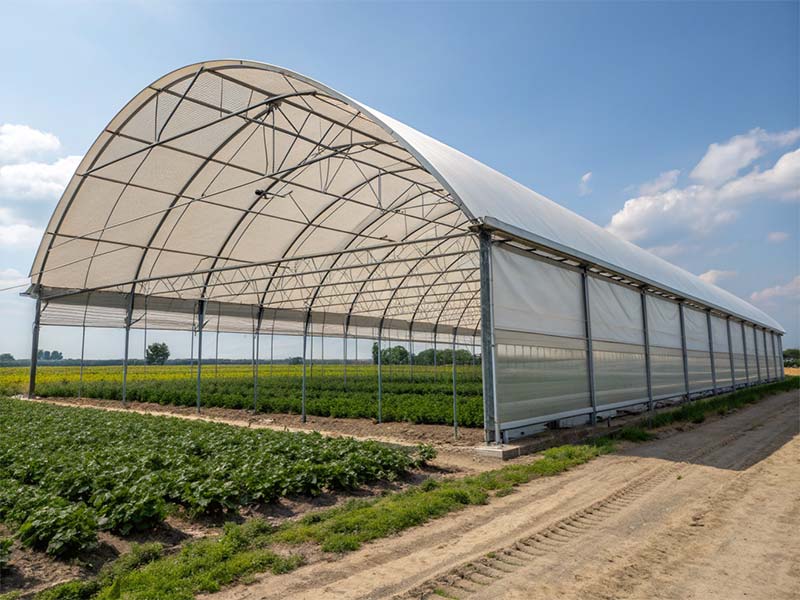
I. Why Does Agriculture Need Tensile Fabric Covered Structures?
Traditional agricultural facilities (such as brick-and-mortar greenhouses and plastic greenhouses) suffer from low light transmittance (<70%), high energy consumption, and short lifespan. Tensile fabric covered structures directly address these needs:
- Controllable Light Transmittance: Natural light transmittance of 80%-95% (adjusted according to membrane material type), promoting photosynthesis and reducing energy consumption for artificial lighting.
- Thermal Insulation and Temperature Regulation: The double-layer membrane structure with an air layer can reduce the indoor-outdoor temperature difference by 10-15℃, providing cooling in summer and insulation in winter.
- Lightweight and Durable: Weighing only 1/30th of a steel structure, it is wind-resistant (level 12), snow-resistant (50kg/m²), and UV-resistant, with a lifespan of 15-25 years.
- Flexible Customization: It can be built in any shape, such as arches, domes, and zigzags, adapting to different terrains such as mountains, deserts, and coastlines.
II. Four Core Application Scenarios
1. Intelligent Greenhouse
Tensile fabric structure greenhouses have become the preferred choice for high-value-added crops (flowers, vegetables, seedlings). The Netherlands, as a global benchmark for greenhouse technology, uses PTFE membrane structures in over 90% of its modern greenhouses, combined with sensors and automatic window opening systems to achieve dynamic regulation of temperature, humidity, and CO₂ concentration.
Case Study: Dutch tomato greenhouses, through optimized light transmission via membrane structures, have increased yields by 40% and reduced energy consumption by 35% compared to traditional greenhouses.
Innovation: In Middle Eastern desert regions (such as Saudi Arabia), membrane structures and desalination greenhouses are used, utilizing the membrane material to reflect strong sunlight and reduce evaporation, achieving water savings of up to 60%.
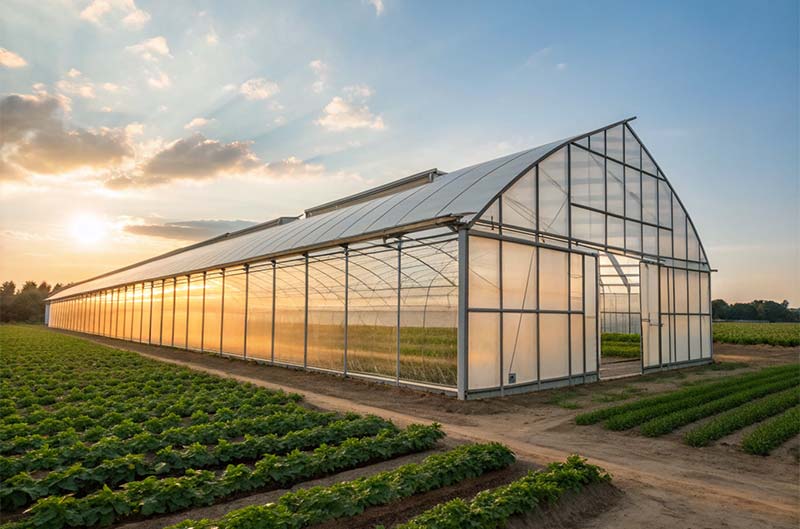
2. Shading and Cooling Systems
In tropical and subtropical regions (such as India and Brazil), open-field cultivation is susceptible to high-temperature stress. Tensile fabric shading films can adjust the shading rate as needed (30%-90%), creating a cooling effect when combined with a misting system.
Data: After installing shading films in banana plantations in Thailand, the fruit sunburn rate decreased from 25% to 5%, and the ripening period was shortened by 10 days.
Trend: Southeast Asia is promoting the integration of photovoltaics and shading films. Solar panels are laid on the top of the film to generate electricity, while shade-tolerant crops (such as mushrooms) are grown underneath, achieving dual use of the land.
3. Agricultural Product Storage
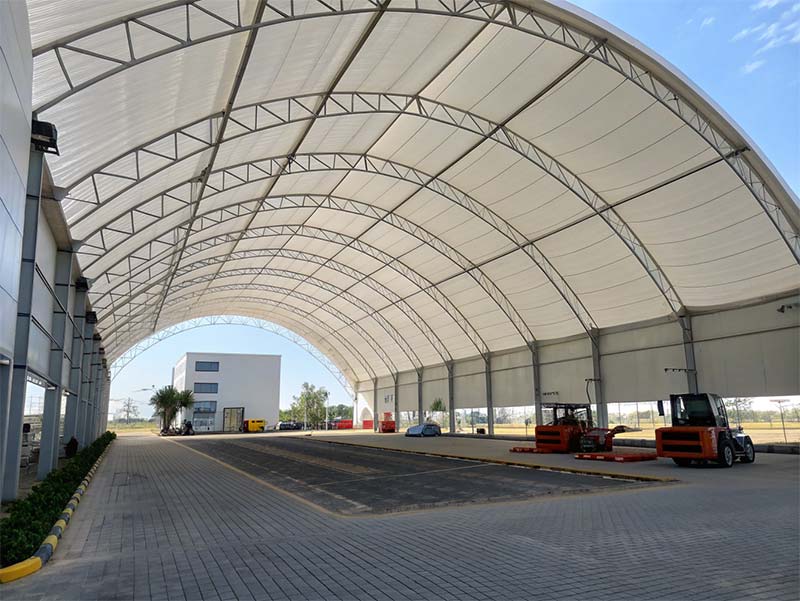
Traditional storage relies on brick-and-mortar warehouses, which are costly to construct and difficult to move. Tensile fabric structure storage tents can be quickly erected using an inflatable/tensioned method, and with ventilation and humidity control equipment, are suitable for short-term preservation of fruits, vegetables, and grains.
African Practices: Kenyan flower exporters use PVC membrane storage tents for pre-cooling and preservation before transportation, reducing the loss rate from 20% to 8% and increasing export premiums by 15%.
Advantages: Modular design supports rapid assembly and disassembly, allowing for flexible deployment for temporary storage during busy farming seasons and emergency reserves after disasters.
4. Ecological Aquaculture
In livestock farming, tensile fabric covered structures are used for shading livestock sheds and fishponds. For example, salmon farms in Northern Europe use semi-transparent membranes to cover net cages, simulating natural light cycles to promote fish growth. Pigsties in southern China use membrane structure roofs, combined with negative pressure ventilation, to keep indoor temperatures 8-10°C lower than outdoor temperatures in summer, reducing heat stress mortality.
III. Global Innovation Trends
Smart Membrane Material Upgrades: Photochromic films and temperature-controlled films (absorbing infrared heat radiation) have entered the commercialization stage, further reducing energy consumption.
Circular Economy Model: Dutch companies have launched membrane recycling programs, processing old films into recycled fibers for use in agricultural mulch or packaging materials.
Digital Twin Management: By using BIM modeling to simulate the performance of fabric structures in different climate zones, design schemes can be optimized, such as increasing cable net density in typhoon-prone areas.

Conclusion
Tensile fabric covered structures with their lightweight yet robust load-bearing capacity, are reshaping the boundaries of agricultural production by using flexibility to overcome rigidity challenges. Whether it’s an oasis greenhouse in the desert, a shade farm beside the rainforest, or a mobile warehouse on the grassland, they all prove that the future of agriculture doesn’t have to rely on heavy cement and steel; a breathable fabric can also support the hope of a bountiful harvest.