
How to build sports fields using tensile membrane and steel structures?
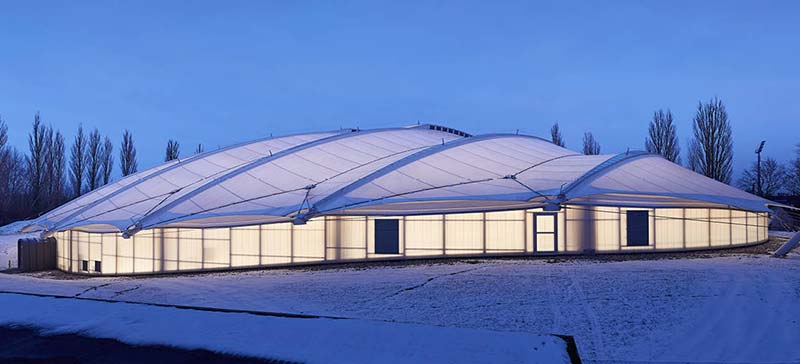
The key to constructing sports fields using tensile membranes and steel structures lies in a high-strength steel frame, prestressed PTFE/PVDF membrane material, and scientific form-finding design. Compared to traditional concrete stadiums, this combination can build professional-grade sports fields with large spans, excellent lighting, and good ventilation at 1/3 the cost and 1/2 the construction period.
Why are membrane structure sports fields so popular?
With the explosive growth in global demand for sports infrastructure, especially in schools, communities, and tropical regions, membrane structures have become the mainstream choice:
- Economy: Lightweight (only 1/30th the weight of traditional roofs), significantly reducing the cost of foundations and steel structures.
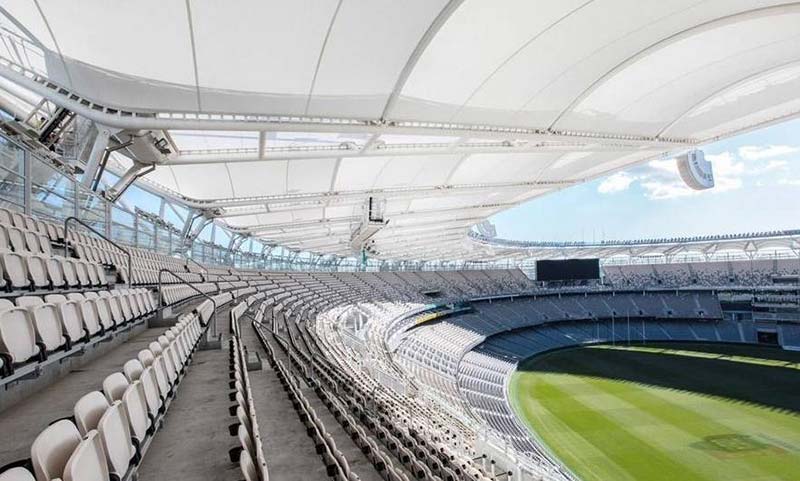
- Functionality: The membrane material has a light transmittance of 20%-40%, eliminating the need for artificial lighting during the day, and filtering ultraviolet rays to protect athletes’ skin.
- Fast Construction: Prefabricated in factories, requiring only on-site assembly, making it particularly suitable for projects with tight schedules in Africa and Southeast Asia.
Construction Steps
1. Foundation and Steel Structure
Material Selection: Q355B high-strength steel is recommended. Its high yield strength allows it to withstand greater wind and snow loads, making it particularly suitable for coastal or windy areas.
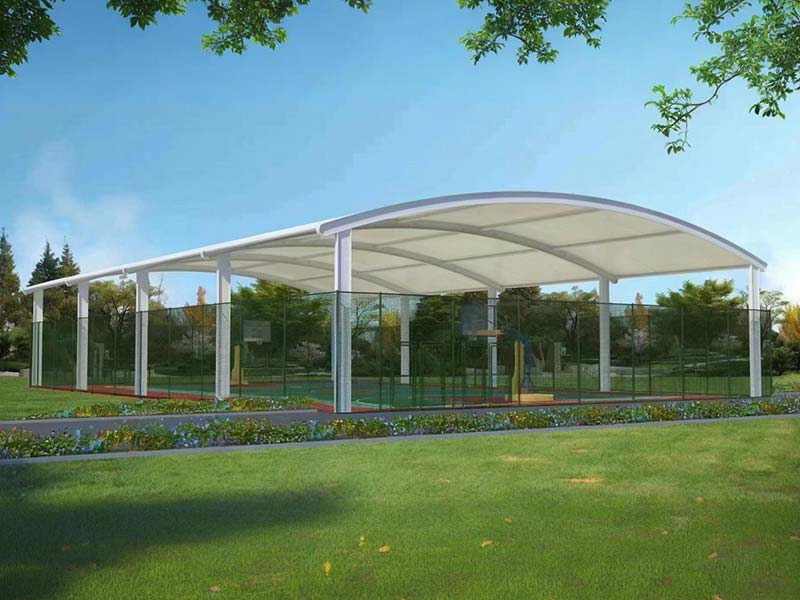
Structural Form: Typically, a space truss or arched steel tube structure is used. This design is not only aesthetically pleasing but also allows for ultra-large spans (column-free spaces), ensuring unobstructed views of the stadium.
2. Tensioned Membrane Material
Key Selection Factors:
- PVDF (Polyvinylidene Fluoride): A cost-effective choice with good self-cleaning properties, suitable for most school and community stadiums.
- PTFE (Glass Fiber): A high-end choice with a Class A fire rating and a lifespan of over 30 years, suitable for large-scale sports venues.
- Design: Shape design must be done through computer-aided 3D modeling. The membrane material must be bi-directionally tensioned to create a negative Gaussian curvature to resist wind suction and prevent collapse in strong winds.
3. Drainage and Anchoring
- Drainage: The membrane surface must be designed with a sufficient slope (usually >5%) to prevent water and snow accumulation from collapsing the structure.
- Boundary: Aluminum alloy strips or stainless steel cables are used to firmly fix the membrane material to the steel beams to ensure airtightness and structural safety.
Canglong Group’s Solutions
Canglong Group provides customized services to address the climatic differences of different countries and regions.
|
Region
|
Climate Challenge
|
Canglong Solution
|
|---|---|---|
|
Southeast Asia / South America
|
High temperatures, heavy rain, typhoons
|
Reinforced Q355B arch steel frame + High-transparency PVDF membrane with enhanced wind column design.
|
|
Middle East / Africa
|
Strong UV radiation, sandstorms
|
PTFE membrane (UV-resistant) + Enclosed sidewall design with ventilation system.
|
|
Europe / Americas / Australia
|
Strict building codes, heavy snow
|
Double-layer membrane structure + Heavy-duty steel structure, compliant with AS/NZS or Eurocode standards.
|
Summary
Tension membrane sports fields are not only rain shelters, but also engineering works of art integrating structural mechanics and materials science. Leveraging its mature Q355B steel structure processing capabilities and internationally standardized membrane material supply chain, Canglong Group provides global clients with one-stop turnkey services from design and production to installation, making sports facility construction simpler and more economical.